

Zavičajni muzej Paraćin


The idea of establishing a museum in Paracin was started in 1947 and despite the advocacy of several enthusiasts of amateurs, it was not realized until 1975. The lack of material resources, adequate space for keeping and exhibiting museums as well as professional staff was an insurmountable obstacle.
Only in 1975, at the initiative of the Municipality of Paracin, the decision to establish a museum was made, and thus the realization of the idea of the almost half century began. At the end of 1977, a modest but valuable collection of collected museums was housed in one of the first floor buildings in Paracin built in the middle of the XIX century in Maksima Gorkog Street no. 17, known as "Ružić House". The basis for the constitution of the museum was the archaeological collection O.Š. "Radoje Domanovic", which was formed by devoted dedication to several amateur enthusiasts led by prof. Momir Jezdicem. Although archaeological objects are almost regularly collected without the criteria required by museology, we are obliged to give credit to enthusiasts for their persistent work. Valuable collections: naturalistic, numismatic and, above all, archaeological over the years, unfortunately, they were significantly impoverished, but they were also a reliable indicator of the richness of this area with movable and immovable cultural goods. In the following year in 1978, in cooperation with the Institute for the Protection of Cultural Monuments in Kragujevac, a project for the adaptation of the building for the needs of the museum was prepared and immediately started its realization. Works on the exhibition set were performed in stages. In the first stage, a permanent exhibition of the Department of History was set up, and in the second there were exhibitions of the Department of Archeology and Ethnology. On the day of liberation of the city on October 13, 1978, a museum was opened in Paracin. Pursuant to the Law on the Protection of Cultural Property in Serbia, in accordance with the decision on determining the jurisdiction of the museum according to the types of artistic and historical works and the territory, the Paracin Museum was constituted in 1990 as the Paracin Museum for the Protection of Artistic and Historical Works for the Territory Municipality of Paracin. Through a permanent museological setting complementing and changing new findings, the visitor of the museum now piles an exhibition designed to provide the most comprehensive picture of the past of this area from the period of the young Stone Age (5200 BC) until the first postwar years. From its founding to this day, the Museum has changed over time. It was changed by society, political and economic environment. Most of it, however, was changed by individuals working in it with the desire to be the visitors, your satisfaction and interest in the center of change.
Today the Parish Museum of the People has numerous exhibits and study material with accompanying museum documentation distributed within the Department of Archeology, History and Ethnology with numerous collections.
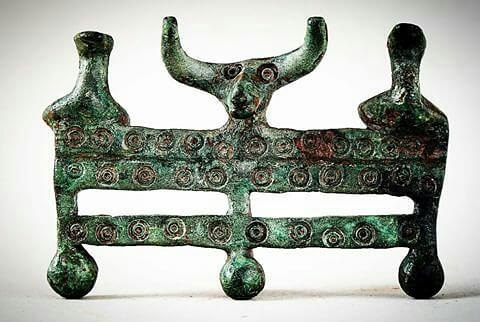
THE DEPARTMENT OF ARCHEOLOGY consists of a palaeontological collection, a collection of prehistoric archeology and a collection of ancient and medieval archeology with a collection of ancient and medieval numismatics. This department takes care of over fifty registered archaeological sites in the territory of the Municipality of Paracin, of course in cooperation with the Archaeological Institute from Belgrade and the Institute for the Protection of Cultural Monuments from Kragujevac.
DEPARTMENT OF HISTORY consists of a fund of political history (posters, photographs and documents), a fund of economic history (photographs and documentation of paracin craftsmen, factories, trade and agriculture), a fund of cultural history (photos, posters and documentation of paracin cultural societies and institutions) (guns and other militaries), the Paraćin sports fund (photographs, posters and documentation of all sports clubs that existed in Paracin), the old city architecture fund (over 500 postcards and photographs of the old Paracin) and finally the fund of modern numismatics (almost complete collections of metal and paper money of the Principality and the Kingdom of Serbia and Yugoslavia from all periods).
THE DEPARTMENT OF ETHNOLOGY is a fund of used glassware (products of the Serbian glass factory), then a fund of used items of rural and urban households (ceramic and metalware, wooden objects and tools, woolen items, costumes, carpets) and a fund of artistic paintings with motifs of the old village architecture from the village of Paraćin municipality.
In addition to these departments, in the Regional Museum in Paracin, conservation workshops and museum library are constantly working, which makes over 3000 professional titles and magazines.
R U W Y Z A D A G R A D A
The Parish Museum in Paracin today is located in the Ružić building, which was built between 1870 and 1875 by Petar Ružić, a judge of the Paracin court and a councilor. The building was built as one of the first floor structures in Paracin with elements of neoclassicism, which was a common case in the mid-nineteenth century in Serbia. Petar Ružić, a more prominent citizen of the paracin municipality, was a great advocate of the development of education in Paracin and beyond. Thus, at his request, the Ministry of Education approved the opening of the first two-level gymnasium in Paracin, "Realčice" in 1878. This building was originally intended for housing in its history and often changed its purpose. In the first years of the Serbian Turkish wars 1876-1878. The premises of this building are used to accommodate a smaller reception hospital. According to historical documents after these wars, some gymnasium departments were located in the building, as well as a women's craft school, founded by the volunteer society "Kola srpskih suseda" around 1910. There was no data for the building during the First World War. from 1919, the Ruzicev's building upgrade returns to a school where it continuously resides until 1929 when the building is taken over by the army for its own purposes. After the Second World War, building often changes its purpose. Used for the needs of the army, the school is returned to its premises for a short time, is used for residential purposes, and for some time it is also the Urban Planning Institute of SO Paracin. By the decision of the Paraćin Municipal Assembly "Ružićeva zgrada" in 1977, it was awarded for permanent use to the Regional Museum, and on November 27, 1984 it was declared a cultural asset - a cultural monument.

Book a nearby experience
