

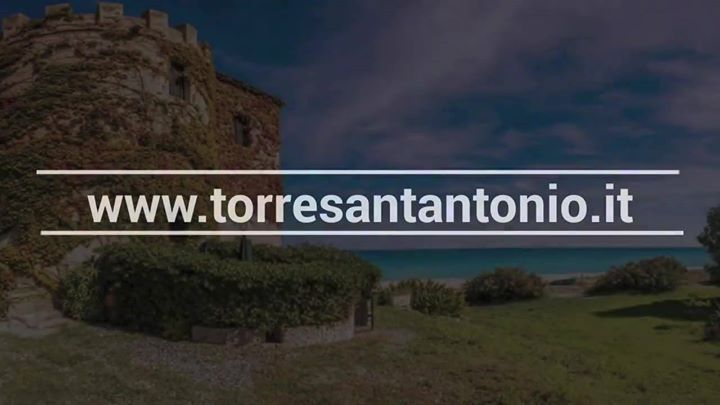
Torre Sant'Antonio


The '' capital of Calabria includes 13 archaeological monuments and sites identified by the Ministry of Culture, 280 between museums, archives and collections, 414 libraries, 186 theaters. The region has a dowry of two orange flag of the Touring Club, among the 10 most beautiful towns in Italy, three villages in its original state and well 159 historical centers and smaller settlements susceptible to protection and enhancement. This is a part of the unmistakable picture that emerges from a 2013 Censis report that places it at the top of the cultural offer. Many real gems, like the thirty coral colonies that grow between 50 and 110 meters deep on the rocky bottom of the mythical Scilla, the largest black coral forest in the world. But in Calabria it is also the largest mosaic of Ancient Greece have discovered, in Monasterace Marina, ancient Kaulonia, representing, among others, a dragon, a rose window and six panels with floral motifs. Not only Sybaris, then. And not even just the beautiful National Archaeological Museum of Magna Grecia, finally restored, home not only of the Bronze, but also the Head of a Philosopher, of Castor, the Kouros. On the promontory of Capo Colonna, a few kilometers from Crotone, is the Hera Lacinia Archaeological Park, which stretches over 30 hectares of land used for excavations and which is among the best-known sacred areas of the Mediterranean basin, with its archaeological museum . The archaeological area of Maras, then, includes the park and the museum of Locri, which houses, among other things, the Pinakes and Persephone. Always on the Ionian coast, on the outskirts of Catanzaro, there is the Roman archaeological park Scolacium, with attached Antiquarium, built on the ruins of the Greek Skilletion, excavated and new discoveries. Are some examples, often unknown to the international public, of what can reserve Calabria to a well-informed tourist. To speak of Calabria with jaded eyes, we met a man who is not from Calabria, but the region has wagered not only all its resources, but even his life: Sergio Zanardi. For over 10 years living in Calabria, backed by a long experience of travel and reportage in the world having served as reporter free lance travel profession for many years, Zanardi has decided to revive this land and putting the soul struggling against " 'inaction of local authorities, the prejudice of users, the shortage of funds, the skepticism of the same Calabrian ". "Who is on vacation in Calabria - he says - a bit 'for the lack of information that is given on the assets of the territory, a little' because it has always mistakenly believed that the only tourist resort in this region is the sea, is especially do beach holidays and almost never this type of tourist walks away from the beach. " And the Calabria for decades has, so to speak, adapted this member hit and run, which in summer reaches stops a month and then removes noise without asking anything else but what he finds: low prices and beautiful sea. Cosenza "city of art" with its Palazzo Arnone, important national art gallery; Santa Severina, where he is one of the most important castles of the entire southern Italy, perfectly restored, "a stone book which recounts 1200 years of History"; the archaeological park of Scolacium, inserted in a context of rare Mediterranean beauty, which was the residence of Cassiodorus; Gerace, the Norman city par excellence, and Locri, with a visit to the museum Paolo Orsi. And then Casignana, for their valuable and beautiful mosaics of Villa Romana; Scylla, the Homeric memory town, overlooking the Strait, with the visit of Chianalea, a corner of Calabria, for its picturesque beauty "has bewitched poets and painters from all over the world"; the House of Culture of Palmi where houses one of the most important art galleries, the one that was Leonidas Repaci, creator of the famous literary Prize Viareggio; Fiumefreddo Bruzio, the medieval village dating back to 1050 and still perfectly preserved, where guests, after the guided tour are then conducted to visit the house of a farmer. Make a cultural journey in Calabria, therefore, also means seeing unusual things, like the Bosnian Pine del Fai (one of the most beautiful trees of Italy, editor's note) or more tall pines of Europe (no, they are not in Germany, Editor's note) visit farms and watch milk processing, know arbresch companies, Albanian origin, as old as history itself, do jeep excursions, on foot, on horseback, visit gorges and creeks, protected areas such as the mouth of Neto with WWF and the Forest. And then, certainly can not miss them, the Bronzes. But not as bright but unique star of an inhospitable region, but as icing on the cake of a rich journey that will leave many, if not all, open-mouthed.

Book a nearby experience
